
Future Tech

Is Biotech the New Frontier in Wellness?
Emily
In 2025, the biotechnology field has ushered in unprecedented breakthroughs in multiple fields. These breakthroughs have not only profoundly changed our medical and health system, but also widely penetrated into environmental protection, agricultural production, food safety and even lifestyle, injecting new impetus into the sustainable development of human society.

Solar Tech Innovations You Should Know About
Charlotte Wilson
Solar energy, a clean, efficient, environmentally friendly and unlimited renewable energy, has become the most competitive green energy with its huge total resources and wide distribution characteristics. Human beings have a long history of using solar energy. From the early concentrated heating method to various high-tech applications today, solar energy has penetrated into every corner of our lives.

Top Tech Trends to Watch in 2025
Olivia Brown
The world is facing unprecedented technological progress. From quantum computing to biotechnology, from space exploration to green energy... the development of science and technology has greatly improved efficiency, spawned new business models and opportunities, and brought profound impacts to society, economy and human life. Looking forward to the new year, there are many events in the field of science and technology that are worth paying attention to.
Why AR Navigation Is Taking Over Traditional Maps
Olivia Brown
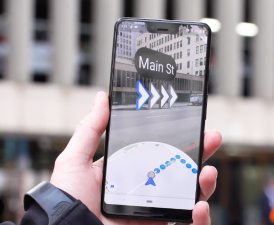
AR real-scene navigation uses a camera to capture the real scene of the road ahead in real time, and then combines the current location of the car, map navigation information and scene AI recognition for fusion calculation, and then generates a virtual navigation guidance model and superimposes it on the real road, thereby creating a navigation screen that is closer to the driver's real vision, greatly reducing the user's reading cost of traditional 2D or 3D electronic maps.
Secondly, it improves the ability to ensure the safety of users' driving. AR navigation can perform intelligent image recognition of passing vehicles, pedestrians, lane lines, traffic light positions and colors, speed limit signs and other surrounding environments, and provide drivers with a series of driving safety assistance functions such as vehicle distance monitoring, collision warning, pedestrian warning, lane departure reminder, front vehicle start reminder, and traffic light reminder, bringing a more refined and safer service experience than traditional map navigation.

These Tech Predictions Might Actually Come True
Greta
With the rapid development of science and technology, many things that were once considered impossible are gradually becoming a reality. Just as people a century ago could not imagine the prosperous Internet world today, we are also looking forward to what amazing new technologies will appear in the future.

Could Quantum Computing Change Your Life?
Liam Smith
It has been more than 120 years since the birth of quantum physics. After its birth, the first quantum revolution followed, giving birth to a large number of technologies such as transistors, lasers, nuclear magnetic resonance, LEDs, etc. The development of these technologies has fundamentally changed people's lifestyles.
Why 3D Printing Is Becoming Mainstream
Greta
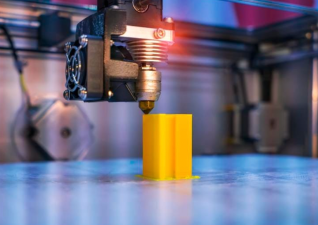
3D printing technology (Three Dimensional Printing, 3DP), also known as "additive manufacturing" or "additive manufacturing", is a disruptive manufacturing technology. It is different from traditional material processing methods. It is based on 3D CAD model data and builds 3D entities by adding materials layer by layer. This technology can directly produce 3D physical entities that are completely consistent with mathematical models, covering the entire process from "rapid prototyping" to "rapid manufacturing". It involves a wide range of technical fields, including CAD modeling, precision machinery, laser technology, etc., showing the charm of multidisciplinary integration.
In recent years, 3D printing technology has received widespread attention around the world. The British magazine "The Economist" even praised it as a landmark technology of the third global industrial revolution, heralding a profound change in the manufacturing industry. The US "Time" magazine also listed 3D printing as "the ten fastest growing industries in the United States", highlighting its popularity around the world. At the same time, domestic media, academia and the financial community have also plunged into the craze for 3D printing technology, and government departments at all levels have also begun to formulate development plans for 3D printing technology.

Is VR Gaming the Future of Entertainment?
Greta
As a disruptive innovation in the digital age, virtual reality (VR) technology is reshaping the form and boundaries of the entertainment industry. From games, movies and TV to cultural and travel experiences, VR has provided unprecedented possibilities for human entertainment with its triple breakthroughs of immersion, interactivity and imagination. However, the maturity of technology, the lack of content ecology and the cultivation of user habits are still bottlenecks for its full popularization.
AR Glasses: Are They Finally Useful?
Charlotte Wilson
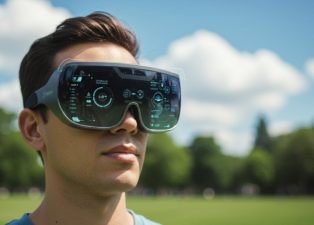
If smart watches are cyber prostheses that regulate the body and mind, heart rate, blood oxygen, and lung capacity, it uses various indicators to prompt the limits of your physical functions, then the services provided by AR glasses, which will explode this year, are obviously much gentler and friendlier.
The mission of AR glasses is to enhance your sense of control over the real world.
Will AR Become a Daily Tool Like Smartphones?
Henry Baker
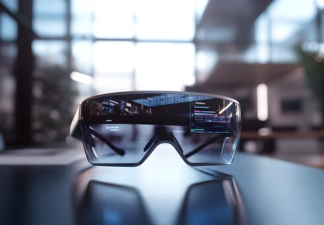
Can you imagine that one day, we no longer have to look down at our phones, but can look up and see a huge virtual screen in front of us? With the continuous advancement of technology, the floor tiles under our feet may be made into touch screens. Today, this "future science fiction" technology has been quietly brought into our lives by an emerging device - smart AR glasses. According to data, the annual compound growth rate of the global AR glasses market is as high as more than 38%, and technology giants have also bet on this field. There is a question that has caused heated discussion.